


What was meant to be a remote expedition across the South Atlantic has instead become the centre of an international health investigation.
A rare hantavirus outbreak aboard the Dutch-flagged expedition cruise ship MV Hondius has prompted health authorities across multiple countries to begin monitoring passengers and tracing potential exposures after several infections and deaths were reported during the voyage. The incident has drawn unusual global attention because of the virus strain involved — the Andes strain of hantavirus, one of the few known variants capable of limited human-to-human transmission.
While officials have said there is no indication of a broader public health emergency, the outbreak has raised fresh questions about a virus that rarely enters public discussion but can cause severe illness under certain circumstances.
How Did the Outbreak Unfold?
The MV Hondius, operated by Oceanwide Expeditions, had been sailing after departing from Ushuaia, Argentina, when passengers onboard began showing symptoms consistent with hantavirus infection.
According to reports, there have been at least three deaths associated with this outbreak, while other cases are still being investigated.
The situation became serious enough for health officials to begin conducting medical evaluations aboard the ship, with some sick individuals being moved for medical treatment and evaluation. The passengers were kept under strict surveillance as officials tried to ascertain the source of the infections and whether transmission had occurred on board the ship.
The vessel was held under observation near Cape Verde as health teams evaluated the situation and coordinated with international agencies.
What might otherwise have been treated as an isolated medical incident quickly developed into a broader international response, with authorities in several countries now tracing passengers who disembarked during earlier stages of the trip.
Reasons Behind Why This Case Attracted Global Attention
Cases of Hantavirus infection are uncommon, but occurrences that include more than one possible case in the same environment are rarer still.
The reason why this case was considered to be especially interesting is the alleged presence of the Andes virus strain, which is predominantly restricted to South American regions.
This particular type of hantavirus strain differs from the others in that it has been known to spread through human contact as well as through infected rodent or environmental exposure.
These factors have made this particular case of Hantavirus infection quite unique.
The confined nature of a cruise ship, where individuals share rooms and socialize in confined quarters, has increased interest in the possible means by which exposure occurred.
Health officials continue to investigate whether the cases resulted from environmental exposure, direct transmission, or another source altogether.
What is Hantavirus?
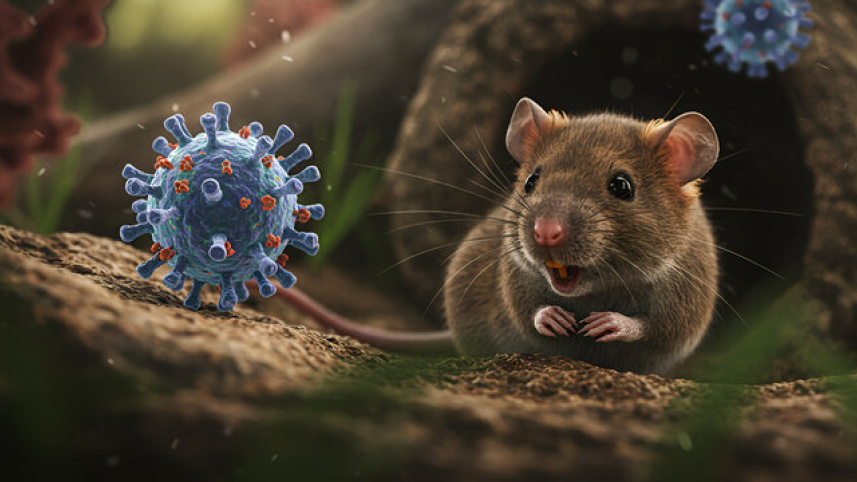
Hantavirus is a group of viruses, which mainly affects the rodents.
Human beings get affected by the virus due to contact with rodent feces, saliva, and urine, mostly through inhalation of virus-infected particles released into the air.
While the virus is rare, it can develop into severe conditions rather rapidly.
One of the complications of this infection is Hantavirus Pulmonary Syndrome (HPS) that affects the respiratory system causing life-threatening problems.
This virus has been found in many locations around the world, but its occurrences are limited and related only to environmental exposure.
What are the Symptoms?
One of the reasons why hantavirus infection is hard to diagnose at an early stage is that its first symptoms are similar to those of other viral infections.
The early symptoms include:
- Fever
- Tiredness
- Muscle pain
- Headache
- Chills
Further symptoms associated with a worsening condition include:
- Breathing difficulties
- Chest discomfort
- Dry coughing
- Difficulties with breathing
In severe cases, accumulation of fluid in the lungs occurs, which requires immediate medical attention.
Since symptoms may progress very fast, quick diagnosis becomes very important.
What Is the Reaction of the Authorities?
This situation has sparked off a global surveillance program conducted by various health organizations.
There have been plans to trace people coming from flights who may have contracted the disease even before the outbreak was discovered fully.
Health experts are trying to understand the source of the infection through reviewing travels and interactions on the plane to find out whether the virus can be spread among people.
The WHO is monitoring the progress.
So far, the authorities maintain that the general risk to the public is minimal.
Should There Be Wider Concerns?
No warning regarding public concern from health authorities has been made about the outbreak.
Even in the Andes strain, there is minimal human-to-human transmission, which occurs only through extensive interaction.
Nonetheless, the outbreak has caused concern because it underscores how rare an infectious disease can escalate to be an international issue when it occurs in an extremely confined environment like ships.
The incident has also brought back to mind hantavirus, a disease that rarely makes headlines but is life-threatening when diagnosed.
Importance of this Epidemic
The case of the MV Hondius ship is important because it shows that even less common diseases can get worldwide attention if special circumstances arise to highlight them.
Further investigations are still ongoing, and health officials are trying to find out exactly what happened during the infection of passengers, as well as if there is anything that can be done differently during a similar situation in the future.
For the time being, it is only important because it demonstrates how fast local problems can become an issue of global interest.
Frequently Asked Questions (FAQs)
1. What is hantavirus?
Hantavirus is basically a set of viruses that are generally transferred via contact with rodents who are carriers of the said disease or their droppings, urine, and saliva. Some types of hantavirus may cause respiratory illnesses such as Hantavirus Pulmonary Syndrome (HPS) in humans.
2. How do hantaviruses spread?
It should be known that hantaviruses are normally transmitted via inhaling the infected material found in the excretions of affected rodents. One of the few hantaviruses capable of spreading via human-to-human contact is the Andes strain of hantavirus involved in the recent outbreak.
3. What are the symptoms associated with hantavirus infection?
Symptoms at the onset of infection may be characterized by fever, body weakness, muscle pains, headaches, and chills. More serious cases may present coughing, chest pressure, and breathing difficulties as the disease advances.
4. Is the current hantavirus outbreak a global health concern?
It has been confirmed that the current threat to the general population is minimal. Surveillance activities will be concentrated primarily among travelers and those directly associated with the outbreak on board a cruise ship.
5. Why is this outbreak receiving so much attention?
This outbreak is receiving much attention because it is related to the suspected cases on the cruise ship, along with the fact that it is linked to the Andes strain of the hantavirus, which is an unusual strain with little person-to-person transmission.