



In a historic electoral outcome, the Bharatiya Janata Party (BJP) has secured a decisive mandate in the 2026 West Bengal Assembly elections, paving the way for the party to form its first government in the state. The result marks a major political transition in Bengal, with BJP winning 207 of the 294 Assembly seats and comfortably crossing the majority mark. The verdict signals a significant shift in the state’s political landscape and ushers in a new chapter in West Bengal’s governance.
The scale of the victory has attracted national attention, not just because of the seat tally, but because of what it signals about the changing political preferences of voters in one of India’s most politically significant states.
Historic Milestone in Elections
West Bengal has always been seen as one of the most distinct political entities within the nation, owing to the influence of regional politics and ideological changes over several decades.
The electoral success of the BJP in 2026 is, therefore, an unprecedented milestone in history, especially since it marks the first instance when the party managed to garner enough votes to form its government in West Bengal on its own merits. It should be noted that this is a landmark achievement for the BJP.
The result also indicates the party’s overall success in the election campaign, with wins coming from many districts rather than specific regions alone.
What Drove BJP’s Strong Performance?
It seems like there are many reasons that impacted the result of the elections.
One important reason was BJP’s continuous growth as an organization in the region of Bengal during the last few years. The organization has become better at reaching out to people through better connections at the booth level.

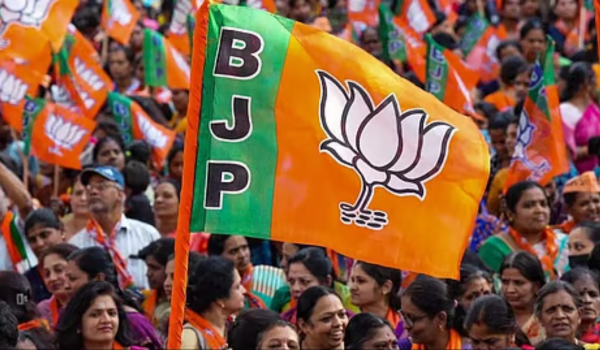
This helped it reach out to voters from different areas in the state.
The messaging during the election campaign was important too.
It seems that the emphasis of the party on governance, development, infrastructural development, welfare provision, and administrative reform struck a chord with many voters looking to move to a new era of politics in their state.
The Prime Minister Narendra Modi continued to be an integral part of the campaign throughout its duration.
In a historic electoral outcome, the Bharatiya Janata Party (BJP) has secured a decisive mandate in the 2026 West Bengal Assembly elections, paving the way for the party to form its first government in the state. The result marks a major political transition in Bengal, with BJP winning 207 of the 294 Assembly seats and comfortably crossing the majority mark. The verdict signals a significant shift in the state’s political landscape and ushers in a new chapter in West Bengal’s governance.
The scale of the victory has attracted national attention, not just because of the seat tally, but because of what it signals about the changing political preferences of voters in one of India’s most politically significant states.
Historic Milestone in Elections
West Bengal has always been seen as one of the most distinct political entities within the nation, owing to the influence of regional politics and ideological changes over several decades.
The electoral success of the BJP in 2026 is, therefore, an unprecedented milestone in history, especially since it marks the first instance when the party managed to garner enough votes to form its government in West Bengal on its own merits. It should be noted that this is a landmark achievement for the BJP.
The result also indicates the party’s overall success in the election campaign, with wins coming from many districts rather than specific regions alone.
What Drove BJP’s Strong Performance?
It seems like there are many reasons that impacted the result of the elections.
One important reason was BJP’s continuous growth as an organization in the region of Bengal during the last few years. The organization has become better at reaching out to people through better connections at the booth level.
This helped it reach out to voters from different areas in the state.
The messaging during the election campaign was important too.
It seems that the emphasis of the party on governance, development, infrastructural development, welfare provision, and administrative reform struck a chord with many voters looking to move to a new era of politics in their state.
The Prime Minister Narendra Modi continued to be an integral part of the campaign throughout its duration.
More than Just the Numbers
Whereas the initial outcome suggests an unambiguous win for the BJP, it should be noted that the political verdict of West Bengal has more nuances that are not captured in the seats won.
The success of the BJP comes from its ability to efficiently convert its votes to seats won within particular constituencies.
Moreover, when looking at the vote-share trend, it can be concluded that politics in West Bengal remains competitive, with various parties continuing to attract the support of their followers.
The high turnout seen during the voting process only adds significance to the event by highlighting the voters’ level of interest in it.
Political Realignment in Bengal


It marks an indication of a significant change in Bengal’s political realignment process.
Bengal’s politics had always been centered on a specific regional context for quite some time now. The 2026 election results indicate that the citizens of Bengal are now considering themselves part of larger national political scenarios while still making judgments about local governance issues.
It also emphasizes the competitive nature of Bengal’s political scenario.
The election cannot be seen just as a win for a particular political party but can only be seen as a natural course in the development of democracy in the state.
A Mandate for Governance
Apart from electoral gains, the verdict has ensured that the focus is firmly placed on governance.
In light of their strong mandate in the legislature, there would be hopes for the areas of development, good administration, creation of employment opportunities, growth of infrastructure, and provision of services to the citizenry.
The newly elected government will thus be under pressure to convert their electoral wins into governance.
Such major political changes usually attract high levels of public expectations, especially when one considers the economic and cultural significance of West Bengal within India.
National Political Importance
The Bengal elections have also acquired national political significance.
West Bengal has traditionally enjoyed great symbolic significance in the politics of India, and BJP’s victory here represents a geographical expansion for the party in eastern India.
The win has been perceived as an important milestone in view of future national-level political battles, which are expected to feature eastern states prominently.
What Lies Ahead
With the onset of a political changeover in West Bengal, the focus will henceforth move from the outcome of the polls to areas related to good governance.
For the people, it is an opportunity that comes with renewed hope about the next chapter of the state’s developmental process.
From the point of view of a political analyst, this result is a clear indication of just how dynamic democratic systems continue to be — such that the entire election scenario can transform considerably in response to evolving public aspirations.
It will be viewed as one of the major landmarks in Bengal’s political history, in both respects mentioned above.
FAQs
How many seats did BJP win in the 2026 West Bengal Assembly election?
BJP won 207 seats out of the total of 294 seats in the West Bengal Assembly, easily securing a majority.
Why do we regard this outcome as a historic one?
This marks the first time that BJP has gained enough seats for forming its own government in West Bengal.
What were some of the important reasons for BJP’s success?
Among the important ones were organizational growth, constituency-level campaigning, governance-oriented campaigns, and voter mobilization.
Does this outcome suggest a political shift in Bengal?
Yes, the result indicates shifting political trends, but the coming elections will reveal the sustainability of such a shift.
What is the way forward after this outcome?
The next steps include the formation of the government and then prioritizing governance issues.